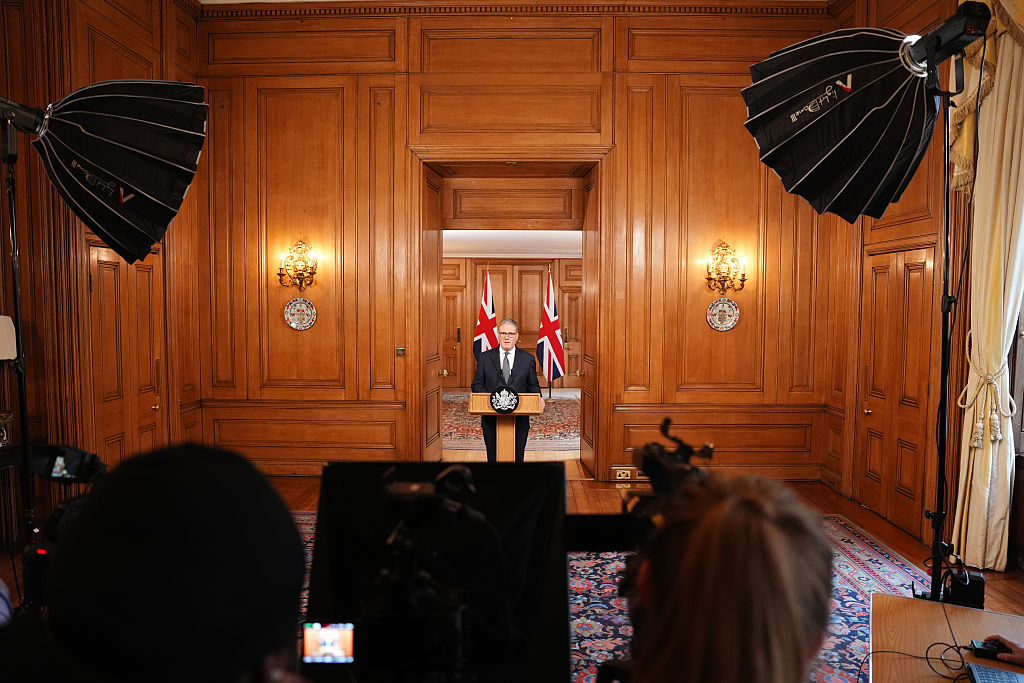
Starmer's Iran Policy: Navigating a Geopolitical Minefield Amidst Tory Fury
The global stage is often a crucible for political leadership, and few recent moments have tested that more acutely than the escalating tensions in the Middle East. At the heart of a contentious debate, UK Prime Minister Keir Starmer has found himself walking a tightrope with his nuanced approach to Iran. His decisions regarding US military operations against Iran have not only ignited fierce opposition from the Conservative benches but have also drawn scrutiny from international allies and former US presidents. This article delves into the intricate details of Starmer's Iran policy, examining the rationale behind his choices, the bases involved, and the significant geopolitical fallout.
A Deliberate Stance: Refusing Offensive Strikes, Approving Defensive Action
In a move that defined his initial response to the unfolding crisis, Keir Starmer unequivocally declared his opposition to what he termed "regime change from the skies." Speaking in the House of Commons, he drew a stark parallel with the 2003 Iraq War, emphasizing the critical need for a robust legal basis for any offensive military action and a clear, coherent plan for the aftermath. This firm stance led to his refusal of Washington's initial request to allow US warplanes to use British bases for offensive strikes against Iran. This decision, met with shouts of "shame" from the Tory opposition but vocal support from his own backbenchers, underscored a cautious, law-abiding approach to international conflict.
However, Starmer's policy is characterized by a significant, albeit carefully delineated, concession. He later agreed to a separate US request for "defensive" action: the use of British bases to strike Iranian launch sites and missile depots. Starmer meticulously framed this as a distinct operation, designed primarily to protect the estimated 300,000 British citizens residing in the wider Middle East region from potential retaliatory strikes by Iran. Crucially, while UK bases would facilitate these US strikes, British RAF warplanes would not participate directly in attacks *inside* Iran. Instead, the RAF's role would remain focused on defensive measures, such as intercepting Iranian drones and missiles in the broader regional airspace.
The Legal Labyrinth: Justifying "Defensive" Strikes and the Ghost of Iraq
Starmer's differentiation between "offensive" and "defensive" actions is central to his legal and ethical justification, yet it plunges the UK into a complex international law debate. While he steadfastly refused to comment on the legality of the initial US strikes he declined to support, his approval of the "defensive" operations hinges on the principle of protecting British nationals. This justification aims to fit within established international frameworks for self-defence, which permit proportionate action against an imminent threat.
Yet, legal experts, such as military analyst Sean Bell, caution against oversimplification. Bell highlighted that international law often makes no distinction between a nation carrying out an act of war and a nation supporting it, implying potential complicity even in "defensive" support. The challenge lies in defining what constitutes a truly "defensive" pre-emptive strike, particularly when targeting capabilities within another sovereign nation. Starmer’s cautious navigation reflects the enduring shadow of the Iraq War, where perceived breaches of international law and a lack of clear post-war planning led to profound and lasting geopolitical instability.
For individuals keen to understand the nuances of such decisions, it's vital to examine UK complicity concerns: Starmer's stance on Iran conflict and the complex interplay of national interest, international law, and alliance obligations. Understanding these frameworks provides valuable context for Starmer's careful rhetoric and calculated policy.
UK Bases in the Crosshairs: Diego Garcia, Fairford, and Akrotiri's Role
The agreement for these "defensive" US strikes significantly draws British sovereign territory into the conflict. The principal bases identified for use are Diego Garcia, a strategically vital British Indian Ocean Territory, and RAF Fairford in Gloucestershire, southwest England, a key US Air Force hub in Europe. Notably, Starmer confirmed that the British airbase on Cyprus, RAF Akrotiri, would not be used for these specific US warplane sorties into Iran.
The involvement of these bases carries significant implications. Diego Garcia, often described as an unsinkable aircraft carrier, offers unparalleled reach into the Middle East and beyond. RAF Fairford provides a crucial forward operating base for heavy bombers and reconnaissance aircraft. Their usage underscores the UK's continued role as a critical ally to the US, providing essential logistical and operational support, even as British forces themselves maintain a non-combat role *within* Iran.
The volatile regional context was starkly highlighted by incidents at RAF Akrotiri. Early on Monday, a suspected Iranian drone reportedly crashed into the runway, causing limited damage but no casualties. Hours later, two more drones heading for the base were intercepted. While military analyst Sean Bell suggested the first projectile may have been unarmed and fired from Lebanon, the incidents serve as a potent reminder of the palpable threats faced by UK assets in the region and the potential for unintended escalation.
Navigating the Fallout: Tory Fury, Trump's Disapproval, and Regional Stability
Starmer's carefully calibrated Iran policy has, predictably, created waves both domestically and internationally. Domestically, Tory opposition leaders seized upon his perceived inconsistency and caution, accusing him of indecisiveness and failing to stand shoulder-to-shoulder with the US. Their "shame" at his initial refusal reflected a traditional Conservative alignment with a more interventionist foreign policy. However, Starmer's ability to secure support from his own Labour backbenchers suggests a deeper appeal for a more measured, legally-grounded approach to international conflict within his party.
Internationally, the policy also drew criticism, most notably from former US President Donald Trump, who reportedly felt Starmer's decision to allow base usage came "too late." This reaction underscores the pressure the UK faces from its closest ally and the often-conflicting expectations from different US administrations. The "special relationship" between the UK and US is constantly recalibrated by such events, with each leader seeking to balance national interests with alliance commitments.
For Starmer, the challenge is clear: maintain UK national security interests, uphold international law, and manage the expectations of allies, all while navigating a complex domestic political landscape. His decisions regarding the Keir Starmer's Iran dilemma: defensive support amidst outcry will inevitably shape perceptions of his leadership on the global stage.
Implications for British Citizens and Future UK Foreign Policy
The stated primary goal of Starmer's "defensive" approach is the protection of British citizens in the wider Middle East. This is a critical consideration for any government, particularly in a region prone to rapid escalation. The choice to permit US strikes from UK bases, while not involving British combat aircraft in those specific missions, is an attempt to mitigate direct UK involvement in an offensive capacity while still providing robust support to a key ally in addressing what is perceived as a direct threat.
However, the potential for the UK to be drawn deeper into a conflict it did not choose remains a significant concern. The entanglement of UK bases, even for "defensive" purposes, links Britain directly to military actions against Iran. This has long-term implications for the UK's standing in the region, its diplomatic efforts, and the safety of its personnel and citizens abroad.
Practical Tips for Understanding Geopolitical Tensions:
- Verify Sources: In fast-moving conflicts, information can be fluid. Always cross-reference news from multiple reputable international outlets.
- Understand Historical Context: Current events are often rooted in historical grievances or alliances. A basic understanding of regional history can provide invaluable insight.
- Distinguish Fact from Rhetoric: Political statements often serve multiple purposes. Try to identify the core facts and separate them from political posturing or diplomatic language.
- Consider Multiple Perspectives: Different nations and actors have varying interests and viewpoints. Seeking out diverse analyses can offer a more complete picture.
Starmer's approach is a pragmatic attempt to balance these competing demands. It represents a pivot away from overt interventionism, learned from past mistakes, towards a more cautious, legally-grounded foreign policy. Yet, the realities of alliances and global power dynamics ensure that even a cautious approach can lead to entanglement in the complexities of international conflict. The "starmer iran attack" policy, therefore, is not merely about immediate military action, but about the very identity and direction of UK foreign policy in a volatile world.
Conclusion
Keir Starmer's handling of the starmer iran attack situation reflects a profound struggle to redefine Britain's role on the global stage. By refusing to join initial US offensive strikes but permitting "defensive" actions from UK bases, he has charted a complex course. This strategy aims to uphold international law, protect British citizens, and support key allies, all while explicitly learning from the lessons of past interventions. However, the policy has ignited significant domestic fury and international scrutiny, underscoring the formidable challenges of navigating geopolitical tensions. As the Middle East remains a crucible of conflict, Starmer's nuanced approach will continue to be tested, shaping not only the UK's immediate responses but also its long-term foreign policy trajectory.