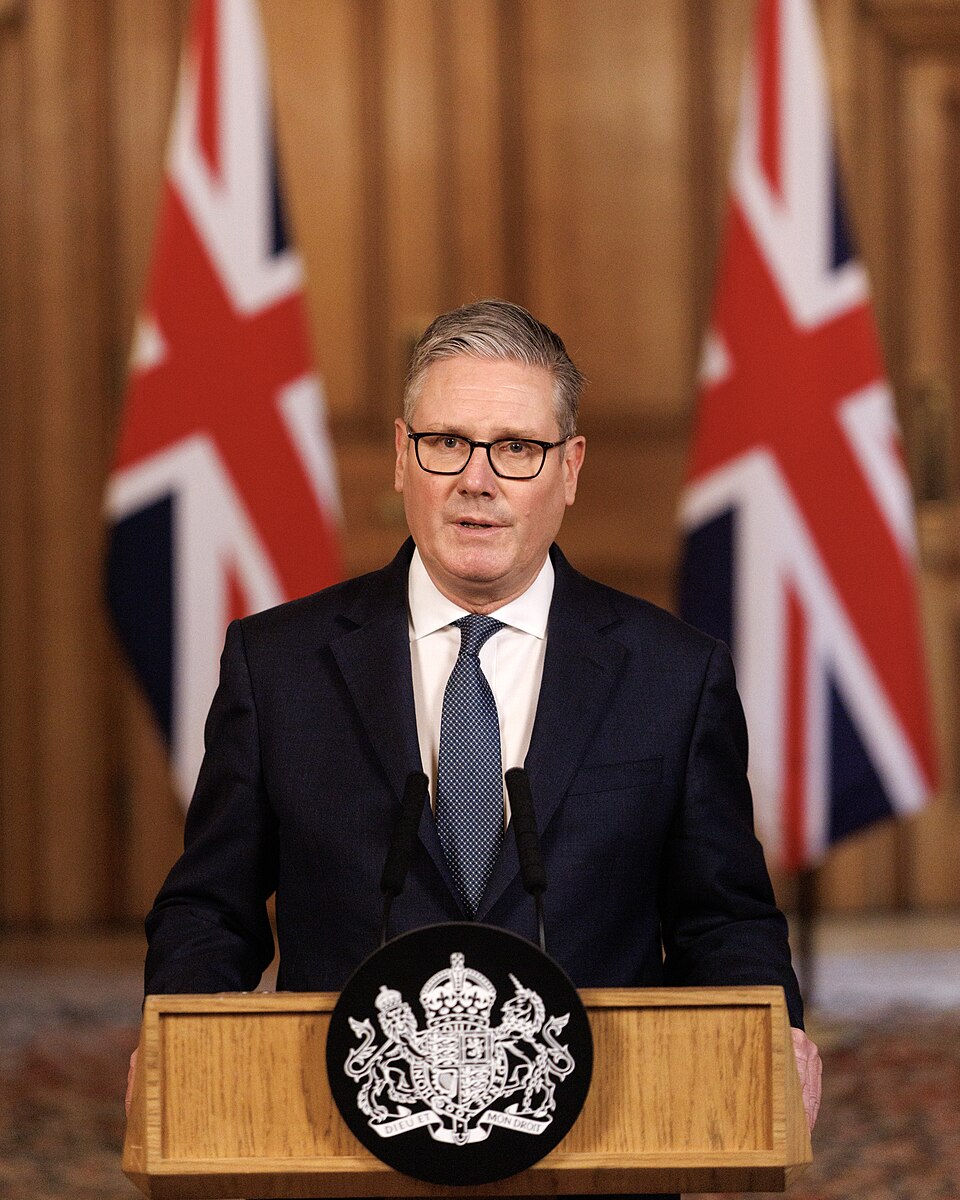
Keir Starmer's Iran Dilemma: Navigating Defensive Support Amidst Outcry
Prime Minister Keir Starmer finds himself at the crucible of a profound foreign policy challenge, grappling with the escalating tensions between the United States and Iran. His measured approach to the unfolding crisis, particularly concerning direct military action against Tehran, has ignited a fierce debate within Westminster and across international capitals. At the heart of his strategy lies a crucial distinction: a firm rejection of offensive "regime change from the skies," coupled with a cautious agreement to provide "defensive support" to the US. This delicate balancing act, designed to protect British interests while avoiding deeper entanglement in a potentially catastrophic conflict, underscores the immense pressure on Starmer and the complexities of modern geopolitics. The decision to permit the use of British bases for certain operations has particular resonance, prompting an intense spotlight on Starmer’s stance on a potential **starmer iran attack**.
Rejecting Offensive Action: Learning from History's Hard Lessons
From the outset, Keir Starmer made his position on offensive military strikes against Iran unequivocally clear. Addressing the House of Commons, he declared a fundamental disbelief in "regime change from the skies," a statement loaded with historical weight. This commitment is deeply rooted in the "lessons of the 2003 war in Iraq," a conflict that profoundly shaped a generation of British politicians and the public's perception of military intervention. Starmer stressed the imperative for a robust legal basis for any offensive military action and, critically, a coherent, post-intervention plan – factors widely considered absent in the lead-up to the Iraq War.
This principled stand was immediately put to the test. Starmer revealed that over a tense weekend, he had refused a direct request from Washington to allow US warplanes to use British bases for initial, presumably offensive, strikes on Iran. This decision drew a sharp and vocal backlash from the Conservative opposition benches, with shouts of "shame" ringing through the Commons. Yet, it also garnered significant support from his own Labour backbenchers, highlighting the deep divisions within UK politics regarding military engagement in the Middle East. Starmer's rejection of this initial US request signals a significant departure from previous UK foreign policy tendencies to align closely with Washington on such matters, emphasizing a more independent, albeit cautious, approach rooted in the avoidance of past mistakes. This careful calibration of support for an ally while maintaining strategic independence is a defining characteristic of
Starmer's Iran Policy: UK Bases, US Strikes, and Tory Fury.
The Nuance of "Defensive" Support: A Strategic Compromise
While Starmer firmly rejected offensive participation, his administration subsequently agreed to a second, distinct request from the US: the use of British bases for what he characterized as "defensive" action. This agreement, made on Sunday night, focused on enabling US warplanes to strike Iranian launch sites and missile depots. Starmer presented this as a crucial measure designed to protect British citizens ��� an estimated 300,000 in the wider Middle East region – from retaliatory strikes by Iran. The distinction between "offensive" and "defensive" action, while strategically complex, formed the bedrock of Starmer's political justification.
Under this agreement, US warplanes would be permitted to launch sorties targeting Iranian missile infrastructure from the remote Diego Garcia base in the Indian Ocean and the RAF base in Fairford, Gloucestershire. Notably, Starmer explicitly stated that Britain’s airbase on Cyprus, RAF Akrotiri, would *not* be used by US warplanes for these specific internal strikes on Iran. This decision came shortly after a suspected Iranian drone incident at Akrotiri, which caused limited damage but served as a stark reminder of the regional threat. British RAF warplanes, while not taking part in the strikes inside Iran, would continue their vital role in the wider region, working to intercept Iranian drones and missiles out of the air. This nuanced approach aims to support an ally's security objectives while strictly limiting direct UK offensive involvement, navigating a tightrope between alliance obligations and the dangers of escalation. The emphasis on protecting British nationals underscores the perceived immediacy of the threat and the pragmatism informing this difficult decision.
International Law, Complicity, and Political Fallout
Starmer's nuanced stance, while an attempt at strategic compromise, has not escaped intense scrutiny regarding its legal and political implications. When pressed in the Commons, Starmer notably "swerved questions" over whether he believed the initial US strikes that he refused to participate in were illegal. This evasion highlights the inherent difficulty in drawing clear lines in such a volatile international context. Military analysts, such as Sean Bell, have cautioned that international law "makes no discrimination between a nation carrying out the act of war and a nation supporting that act of war, so you’re both equally complicit." This perspective raises profound questions about the UK's legal standing and perceived involvement, even in "defensive" actions that facilitate another nation's military operations. The notion of
UK Complicity Concerns: Starmer's Stance on Iran Conflict is a serious one for any Prime Minister.
Adding to the complexity, the decision did little to placate former US President Donald Trump, who publicly stated that Starmer's agreement "came too late," indicating dissatisfaction with the perceived delay or the limited nature of the UK's support. This demonstrates the difficulty of satisfying diverse international expectations during a crisis. Iran's extensive ballistic missile programme, a core component of its military strength, presents a significant regional threat. While some of these missiles have the range to threaten the UK, they generally do not extend far enough to strike the US mainland, a factor that likely influences differing threat perceptions and desired responses between allies. The overall context underscores a situation where the US has taken decisive action, leaving other nations, including the UK, to manage the complex fallout and justify their positions on the international stage.
The Path Forward: Balancing Alliances, De-escalation, and Regional Stability
Keir Starmer's handling of the Iran dilemma encapsulates a precarious balancing act: maintaining crucial alliances, particularly with the United States, while simultaneously striving to prevent an uncontrolled escalation into a wider, more destructive conflict. His strategy is a tightrope walk between geopolitical imperatives and the lessons of recent history. The explicit rejection of "regime change from the skies" signals a more cautious, less interventionist foreign policy direction for the UK, aiming to avoid repeating past missteps that have destabilized the Middle East.
Moving forward, Starmer's government will face continuous pressure to justify its actions and clarify its red lines. The emphasis on "defensive" measures, aimed at protecting British citizens and infrastructure, provides a pragmatic rationale for engagement. However, the long-term objective must remain de-escalation and the pursuit of regional stability through diplomatic channels. This will require robust coordination with European partners – as demonstrated by the joint statement with France and Germany advocating for "proportionate defensive action" – to present a united front and leverage collective influence. Practical steps for the UK will involve:
* **Sustained Diplomatic Engagement:** Actively pursuing pathways for dialogue and de-escalation with all regional actors.
* **Strengthening Intelligence Sharing:** Enhancing collaboration with allies to ensure accurate threat assessments and timely responses.
* **Upholding International Law:** Consistently advocating for adherence to international legal frameworks, even amidst difficult strategic choices.
* **Protecting British Interests:** Prioritizing the safety of UK nationals and assets in the region through all available means.
This delicate dance underscores the evolving nature of global power dynamics and the increasing demands placed on leaders to navigate complex geopolitical landscapes with prudence and foresight.
Conclusion
Keir Starmer's response to the prospect of a **starmer iran attack** has defined a critical moment for his leadership and for UK foreign policy. By distinguishing between offensive intervention and defensive support, he has attempted to chart a course that upholds alliance commitments while unequivocally rejecting the notion of unprovoked regime change. This nuanced position, while drawing criticism and raising questions about legal complicity, reflects a conscious effort to learn from the past and safeguard British interests without being drawn into an open-ended conflict. The outcome of this strategy will have lasting implications for the UK's role on the international stage, its relationships with key allies, and the broader stability of the Middle East. The dilemma remains potent, requiring ongoing vigilance, strategic acumen, and a steadfast commitment to de-escalation in a region perpetually on the brink.